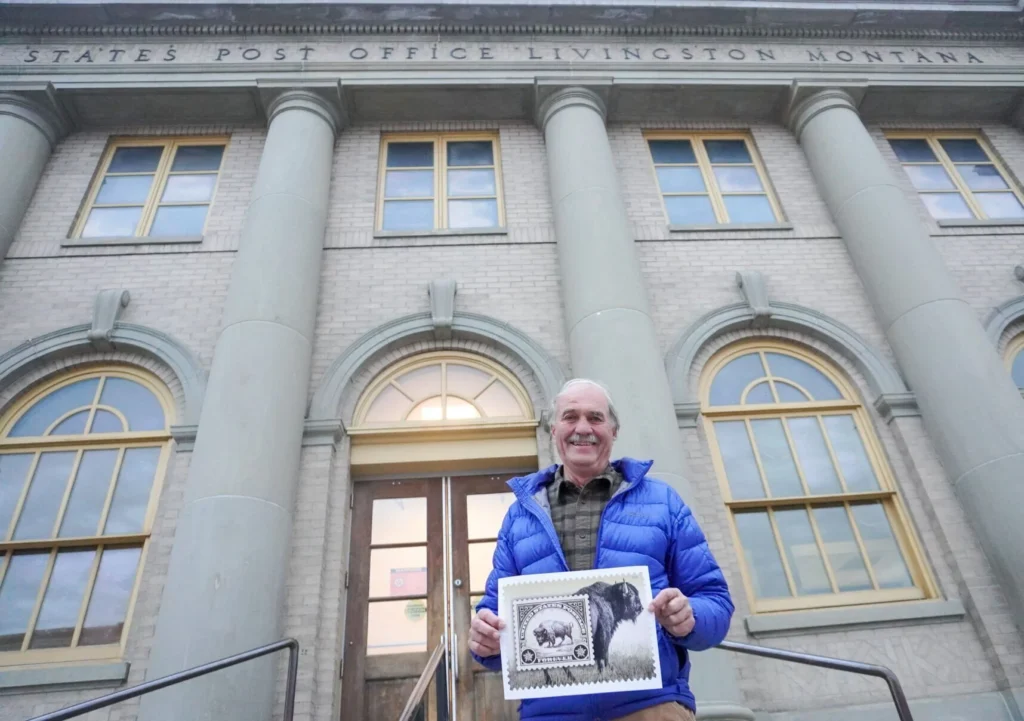
LIVINGSTON — The U.S. Postal Service is printing 15 million copies of a bison image by Livingston photographer Tom Murphy on a Forever Stamp in 2026, immortalizing the local artist’s work in postage history.
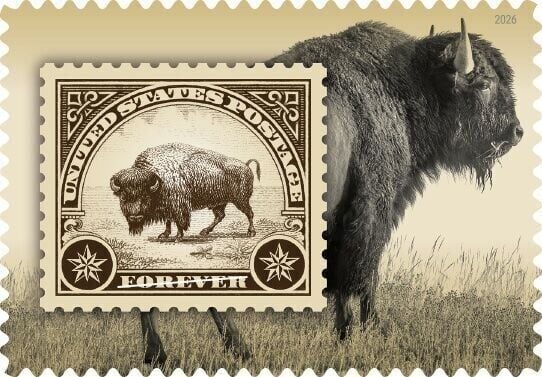
Dubbed “American Bison,” the two-and-a-quarter-inch-wide stamp, nearly twice the standard size, debuts at the 2026 World Stamp Show in Boston in May next year.
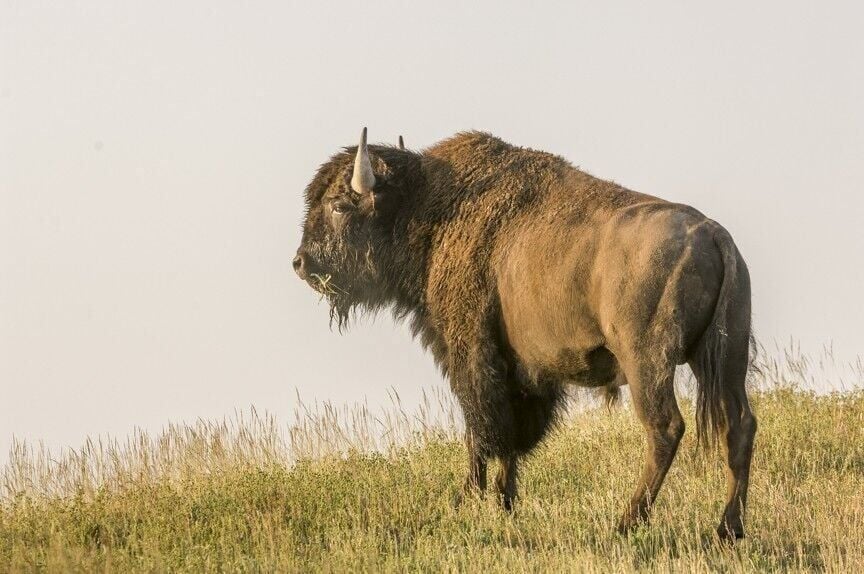
Murphy’s philatelic photo is simple — a broad shot from 2005 of a young 4- to 5-year-old bull bison. In the image, the majestic grazer surveys its surroundings on Grizzly Overlook in the Hayden Valley, an expansive sub-alpine landscape in Yellowstone National Park.
The finished product is reminiscent of the first bison stamp, an engraving from 1923, according to Postal Service art director Greg Breeding. He sought a contemporary photograph to accompany the original engraved design.
“Tom Murphy’s photo has the kind of reproducible detail that so many other photos lack,” said Breeding. “It also happens to have a background of clean sky and pretty magnificent grass,” elements echoing the 1923 stamp.
Murphy’s image serves as a background for the 1923 engraving, reproduced in the stamp-within-a-stamp design. Breeding explained seamlessly blending prairie grass between the two art pieces allows for design continuity across each row of the 16-stamp panel.
“This is a year of bison for me,” said Murphy, 75, who is also working on a thematic photo book on the animal and assisting the Buffalo Bill Center of the West in Cody, Wyoming with bison images for a new exhibit. He explained finding the perfect picture to complement the 1923 inset engraving proved trickier than expected.
“They were struggling to find a bison image for this,” added Murphy, recalling the initial phone call he received from a Postal Service photo researcher, referred to the photographer by a local resident.
Murphy originally sent 15 of his favorite bison shots. However the Postal Service got back, stating none of the photos work. USPS sent Murphy an example of a European bison. The Livingston photographer then realized what the stamp makers were searching for.
“They wanted a broad shot,” he said, explaining he re-browsed his files containing 6,000 original bison shots before sending 14 new examples. “They immediately said this is perfect.”
“What is unusual is [the bison] is looking around,” said Murphy, describing the chosen photo. “Most of the time they are looking down grazing. To be real blunt it is not my favorite photograph, but it certainly fits the postage stamp requirements.”
Murphy does not consider the image to be his best work among globally renowned snapshots he has had published in the New York Times. His work was also featured in the PBS nature episode “Christmas in Yellowstone.” However, he called the opportunity to be featured on a stamp exciting, explaining bison are one of his favorite animals.
“They are amazing critters,” said Murphy, recalling his fascination with bison dating back to when he dug up the animals’ skulls on his family’s ranch in western South Dakota as a child.
Wild bison were virtually eliminated from South Dakota and the U.S. by 1883. By the time it became a state in 1889, bison were nearly extinct in the U.S.
Fueling the bison slaughter was an Army campaign to offer the large mammal as a food source for Native Americans. Bison elimination was also driven by commercial hunting, industrial leather demand, and burgeoning westward railroads. By 1884, the number of bison in the U.S. shrunk from tens of millions to about 325.
Murphy described bison as one of the main reasons he moved to Livingston in 1978.
“At that time there were 1,500 bison in Yellowstone,” he said. “It has been fun and encouraging seeing [more than] 5,000 head in the park now.”